He is too courteous to mention: 4) The, who are being paid to hold a particular view. As Upton Sinclair has kept in mind, "It is challenging to get a man to comprehend something, when his salary relies on his not understanding it." Barry Ritholtz concludes: "The rejecting of truth has actually been a problem, from Galileo to Columbus to contemporary times.
As Gerald Epstein, an economic expert at the University of Massachusetts has actually said: "These types of things do not contribute to the pie. They rearrange itoften from taxpayers to banks and other monetary organizations." Yet in the expansion of the GDP, the growth of the financial sector counts as increase in output.
When those items exploded, they practically took the entire economy with them. The present period of synthetically low rates of interest mirrors strangely the duration ten years earlier when Alan Greenspan held down rates of interest at very low levels for a prolonged time period. It was this that set off the imaginative juices of the monetary sector to find "innovative" new ways of getting greater returns.
Efforts to weaken the Volcker Rule are well advanced. Even its initial author, Paul Volcker, says it has actually ended up being unfeasible. And now front males like Bloomberg are busily rewriting history to allow the bonuses to continue. The question is really basic. Do we want to reject truth and decrease the exact same path as we decreased in 2008, pursuing short-term revenues till we come across yet another, even-worse financial disaster? Or are we prepared to confront reality and undergo the phase modification associated with Discover more refocusing the economic sector in basic, and the monetary sector in particular, on supplying authentic value to the economy ahead of short-term profit? And see likewise: The Dumbest Idea On The Planet: Making The Most Of Investor Worth __ Steve Denning's newest book is: The Leader's Guide to Radical Management ( Jossey-Bass, 2010).
Although the precise causes of the monetary timeshare refinance crisis are a matter of dispute among economists, there is basic agreement relating to the aspects that played a function (experts disagree about their relative significance). First, the Federal Reserve (Fed), the reserve bank of the United States, having actually prepared for a mild economic downturn that started in 2001, minimized the federal funds rate (the interest rate that banks charge each other for overnight loans of federal fundsi - what are the interest rates on 30 year mortgages today.
How To Rate Shop For Mortgages Things To Know Before You Buy
5 percent to 1. 75 percent. That substantial decline allowed banks to extend customer credit at a lower prime rate (the rates of interest that banks credit their "prime," or low-risk, clients, normally 3 portion points above the federal funds rate) and motivated them to lend even to "subprime," or high-risk, clients, though at greater rates of interest (see subprime lending).
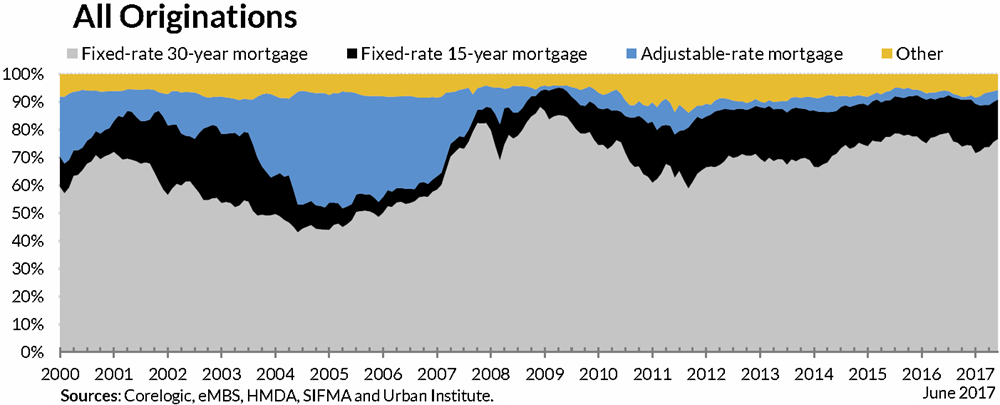
The outcome was the creation in the late 1990s of a "housing bubble" (a rapid increase in home costs to levels well beyond their basic, https://www.openlearning.com/u/grisel-qfl9ur/blog/MoreAboutWhatIsTheCurrentIndexRateForMortgages/ or intrinsic, worth, driven by excessive speculation). Second, owing to changes in banking laws beginning in the 1980s, banks had the ability to use to subprime consumers home mortgage loans that were structured with balloon payments (uncommonly large payments that are due at or near the end of a loan duration) or adjustable interest rates (rates that remain fixed at reasonably low levels for a preliminary duration and float, usually with the federal funds rate, thereafter).
When it comes to default, banks might repossess the property and sell it for more than the quantity of the original loan. Subprime loaning therefore represented a rewarding investment for many banks. what lenders give mortgages after bankruptcy. Accordingly, lots of banks aggressively marketed subprime loans to clients with bad credit or few properties, knowing that those borrowers could not pay for to pay back the loans and often deceiving them about the threats included.
5 percent to nearly 15 percent annually from the late 1990s to 200407. Get special access to material from our 1768 First Edition with your membership. Subscribe today Third, adding to the growth of subprime loaning was the widespread practice of securitization, where banks bundled together hundreds or even countless subprime mortgages and other, less-risky kinds of customer financial obligation and offered them (or pieces of them) in capital markets as securities (bonds) to other banks and investors, including hedge funds and pension funds.
Selling subprime home loans as MBSs was considered a great method for banks to increase their liquidity and decrease their exposure to dangerous loans, while acquiring MBSs was deemed a great way for banks and investors to diversify their portfolios and make money. As home prices continued their meteoric increase through the early 2000s, MBSs became commonly popular, and their prices in capital markets increased accordingly.
Everything about Who Provides Most Mortgages In 42211
e., so huge that their failure would threaten to weaken the entire monetary system). In addition, in 2004 the Securities and Exchange Commission (SEC) compromised the net-capital requirement (the ratio of capital, or possessions, to debt, or liabilities, that banks are needed to keep as a safeguard against insolvency), which motivated banks to invest even more cash into MBSs.
Fifth, and finally, the extended period of global financial stability and growth that instantly preceded the crisis, beginning in the mid- to late 1980s and since called the "Excellent Moderation," had convinced numerous U.S. banking executives, government officials, and economic experts that severe financial volatility was a distant memory.
The Global Financial Crisis started as the United States Subprime Financial Crisis in 2007: Q3 when losses on United States Mortgage-Backed Securities (MBS) backed by subprime home mortgages started to infect other markets, including the syndicated loan market, the interbank lending market, and the business paper market. In some cases, these other markets a minimum of partially froze up. percentage of applicants who are denied mortgages by income level and race.
A variety of large banks, particularly thrifts that were greatly involved in subprime loaning (e. g., Countrywide, Washington Mutual, IndyMac Bank), financial investment banks that purchased and/or packaged subprime MBS (e. g., Bear Stearns, Merrill Lynch, Lehman Brothers), and a big insurer that offered many credit default swaps (CDSs) on subprime MBS (American International Group (AIG)) suffered capital, liquidity, and public self-confidence problems and either failed, were taken over, or were separately bailed out.
It is also notable that bank and thrift failures became so prevalent that the FDIC Deposit Insurance coverage Fund fell into a deficit position and examined banks for 3 years of deposit insurance coverage premiums beforehand to try to fill this hole. United States stock market worths also plunged substantially, with the Dow Jones Industrial Average falling by over half.
How What Do I Need To Know About Mortgages And Rates can Save You Time, Stress, and Money.
The economic crisis led to a variety of government programs to promote the economy, including a huge stimulus government spending bundle and extensive conventional and unconventional monetary policy stimulus by the Federal Reserve. Despite all the bailouts of monetary organizations and federal government stimulus programs, economic losses in the US amounted to in tens of trillions of dollars, as kept in mind in the Introduction.
The financial crisis in the United States was more or less concluded by the end of 2009, by which point much of the TARP funds purchased financial institutions had been paid back, order had been restored to the majority of the monetary markets, and the Federal Reserve shortly thereafter began rolling back expansions to the discount window and concluded the TAF auctions (Berger and Bouwman, 2016).